
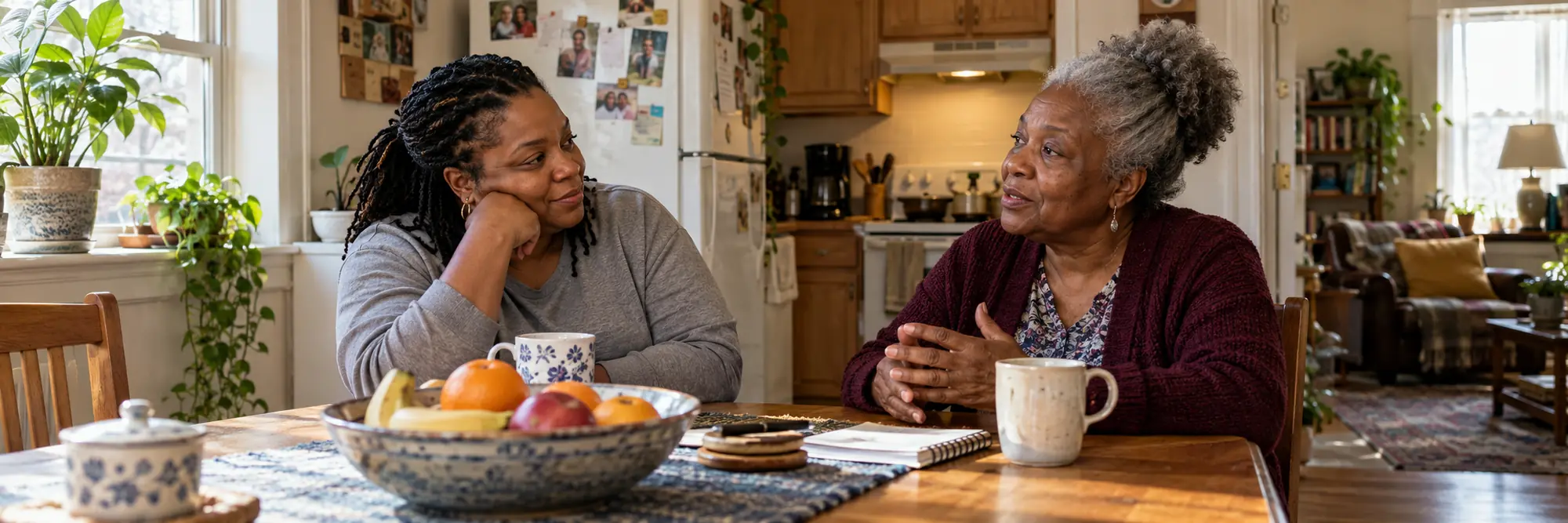
Learning that someone you love may be experiencing domestic violence or sexual assault can bring up a flood of emotions: fear, anger, helplessness, urgency. You don't have to have all the answers. What matters most is that you show up with patience, belief, and care. In Safe Company can help you get started.
Start the Conversation
Opening the door can be as simple as saying, "Are you okay?" or "I'm concerned about you, can we talk?" A few things to keep in mind:
- Believe them. Not being believed can be almost as painful as the abuse or assault itself. False reports are rare, so lead with trust.
- Don't blame them. Even if you think you would have done something differently, every survivor deserves respect, not judgment.
- Let them lead. Ask their permission before offering advice, and let them decide what to share and when. This is their story to tell, on their own terms.
- Offer to go with them, if they want you to, to a hospital, a support group, or simply to talk. Never pressure them to take a step they're not ready for.
A few things to avoid:
- Don't ask "Are you sure that's what happened?" or suggest they misread the situation.
- Don't ask for unnecessary details about the abuse or assault.
- Don't tell them to "just leave" or to "forget about it and move on."
- Don't pressure them to report to law enforcement, confront their partner, or take any action before they're ready.
Survivors often minimize what happened, or struggle to find the words at all. That's normal. Your steadiness — not your urgency — is what helps most.
How a survivor is received in this first conversation can shape everything that follows: whether they feel believed, seek medical care, report what happened, or stay connected to support. Research shows that survivors who connect with an advocate report better experiences when reaching out for help and are more likely to receive medical care, more likely to report to law enforcement, and more likely to experience less distress overall.
That's exactly why connecting your loved one with an advocate, even if you're the one who makes the first call, can make such a meaningful difference. Healing isn't something survivors should have to navigate alone, and neither is knowing how to help them.
Speak to an Advocate 24/7
Know What You Are Seeing
Domestic violence doesn't always look the way people expect. You might notice a loved one's partner who:
- Monitors their phone, whereabouts, or relationships
- Criticizes, humiliates, or demeans them
- Controls their money or prevents them from working
- Makes them feel scared
- Prevents them from spending time with friends or family
- Uses jealousy or "love" to justify controlling behavior
Sexual assault, too, can happen without a visible injury or a struggle. It can involve grooming, coercion, incapacitation, or harm from someone the survivor knows and trusts. Freezing or going along with what's happening are survival responses, not consent, and not the survivor's fault.
One of the most common misunderstandings about domestic violence is "why don't they just leave?" In reality, leaving is often the most dangerous point in an abusive relationship. Survivors may stay, or return, because their partner has threatened to hurt them or the people they love if they try to go. Financial dependence, fear for their children, and having nowhere safe to go are all real, valid barriers, too.
Similarly, a survivor of sexual assault may choose not to report, or may take time to process what happened. They may not disclose what happened for days, weeks, or even years. That doesn't mean it wasn't serious, or that they need convincing to act. Every survivor is the expert in their own life and their own timeline.
Speak to an Advocate 24/7
When They Are Not Ready
Sometimes the person you love isn't ready to leave, to report, or even to talk in depth about what's happening. That's okay. Your role isn't to convince them to do something. It's to stay close, stay steady, and be ready when they are.
Here's how to do that:
- Keep showing up. A consistent, nonjudgmental presence in their life matters more than any single conversation.
- Offer practical support. Help with childcare, transportation, or a listening ear when they need it. Support doesn't have to be dramatic to be meaningful.
- Respect their boundaries. Physical touch, questions about details, or pressure to "do something" can all feel like too much. Let them set the pace.
- Share resources gently, without pressure. Let them know help exists, and that it will still be there whenever they're ready.
- Take care of yourself, too. Supporting someone through trauma can be heavy. Give yourself space to rest and recharge. You can't pour from an empty cup.
Healing isn't linear, and neither is the path to safety. Survivors reclaim their strength when they have someone beside them who believes in them and helps them see what's possible beyond the pain.
We're Here to Help You, Too
If you'd like to talk through how to best support a friend or family member, call one of our hotlines below. Our advocates are happy to help you think it through.
- 24-Hour Domestic Violence Hotline: (404) 688-9436
- 24-Hour Sexual Assault Hotline: (404) 377-1428